Choosing reliable Freeze Dried Krill suppliers in 2026 requires more than comparing prices. Buyers need evidence, traceability, and consistent product quality.
Dr. So Kawaguchi, a Southern Ocean krill researcher with the Australian Antarctic Division, has stated, “Krill are a key species in the Southern Ocean ecosystem.” His observation adds important context. Supplier decisions affect both product performance and responsible sourcing. Ask for the scientific name, harvest region, vessel records, processing location, and complete batch documentation. Do not accept vague claims such as “premium Antarctic krill.”
Examine the physical product closely. High-quality Freeze Dried Krill should show uniform color, a clean marine smell, and minimal powder damage. Request testing for moisture, oxidation, microbiological safety, heavy metals, and relevant contaminants. Certificates should identify the tested lot, laboratory, testing date, and method. A polished certificate is not enough.
Traceability matters.
Check storage conditions, packaging barriers, shipment temperatures, and shelf-life controls. Freeze drying reduces moisture, but it does not prevent careless handling. Ask how suppliers protect the product from oxygen and humidity after processing. Responsible suppliers should also explain their fishery-management standards and applicable certifications.
The difficult part is supplier comparison. Documentation may look complete while practical communication remains weak. I would test a small batch before signing a long-term agreement. That step can reveal odor changes, inconsistent granule size, or delayed responses. No supplier is perfect. A trustworthy partner admits limitations, corrects errors, and provides verifiable evidence instead of impressive language.
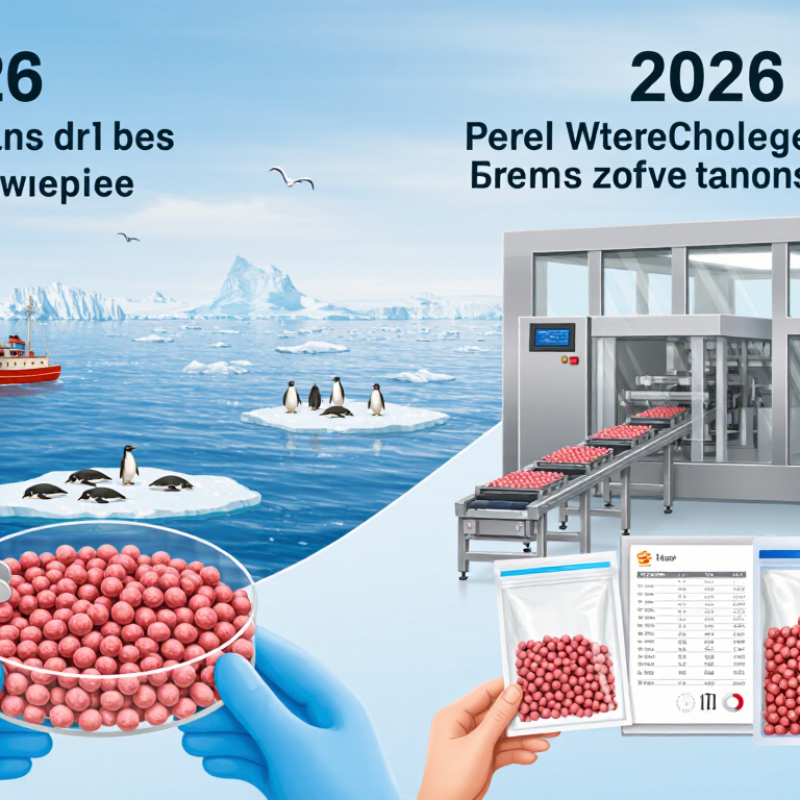
Freeze-dried krill is not simply dried seafood. Processors freeze harvested krill, reduce pressure, and remove ice as vapor. This low-temperature method can preserve color, texture, and sensitive nutrients better than conventional heating. The result should be light, brittle pieces, not oily or damp flakes. It does not automatically make the product safe. Freezing and drying reduce risks, but they do not replace sanitation, testing, or controlled storage.
When comparing suppliers in 2026, request clear specifications for every production lot. These should include species identification, harvest location, processing dates, moisture, and water activity. Water activity must meet a documented limit suitable for the product. Lipid-rich krill also needs oxidation testing, including peroxide and anisidine values. Ask for microbiological results, heavy-metal screening, and relevant environmental contaminant checks. The certificate of analysis should match the lot number and testing date. Traceability matters.
Inspect the packaging, too. A strong oxygen barrier, light protection, and suitable sealing help prevent rancid odors and nutrient loss. A glossy pouch proves little. Supplier claims can sound precise, yet sampling methods may remain unclear. I would ask how samples are collected and stored before testing. That detail is easy to overlook. A reliable supplier explains deviations instead of hiding them. Their answer may be imperfect, but it should be verifiable.
Identifying a reliable freeze-dried krill supplier starts with traceability, not attractive packaging. Request the harvest area, species identification, landing date, processing site, and complete lot history. The CCAMLR Statistical Bulletin 2024 reports recent Antarctic krill catches near 450,000 metric tons annually, against a precautionary limit of about 5.61 million tons. This difference does not remove sourcing risk. It makes documented control more important.
Ask for independent certificates of analysis for every production lot. Check moisture, water activity, peroxide value, anisidine value, microbiological results, heavy metals, phospholipid content, and astaxanthin levels. Freeze-drying should preserve structure, but poor storage can still create oxidation and odor problems. A supplier should explain drying temperatures, packaging barriers, oxygen control, and warehouse conditions. Vague answers deserve a second review.
Scale can hide weak controls. The FAO State of World Fisheries and Aquaculture 2024 reported 185 million tons of aquatic animal production in 2022, with 89% used for human consumption. That volume shows why supply-chain documentation matters across seafood ingredients. Look for batch-specific records, calibrated testing, corrective-action reports, and an audit trail linking raw krill to finished powder. A polished certificate is not proof. No test removes every risk. The uncomfortable question is whether the supplier shares unfavorable results, not only impressive averages.
Choosing freeze dried krill suppliers requires more than comparing price lists. Ask where harvesting occurs and how quickly raw material is frozen. Request lot numbers, harvest dates, storage conditions, and independent test reports. A reliable supplier should provide a recent certificate of analysis. Do not rely on a polished sample from last year. This habit can expose weak documentation.
Product purity depends on contamination controls and careful processing. Check tests for heavy metals, oxidation markers, microbial limits, and unwanted residues. Results should include testing methods, detection limits, and laboratory dates. Packaging should block oxygen and light. A warm warehouse can damage delicate lipids before delivery. Ask whether peroxide and anisidine values are monitored during storage. “Within specification” is not enough.
Nutritional value needs precise, comparable data. Review phospholipid content, EPA and DHA levels, astaxanthin, protein, moisture, and serving size. Confirm whether figures describe the finished powder or the original oil. Freeze-drying can protect nutrients, but poor handling still causes losses.
Taste and odor matter too. A clean, mild marine aroma is expected. Harsh rancidity is a warning. I once treated low moisture as proof of quality. That was too simple. Supplier audits, retained samples, and corrective-action records provide stronger evidence than attractive claims.
Comparing Certifications, Production Practices, and Traceability
Choosing a freeze dried krill supplier requires more than checking a certificate logo. Ask for the certificate number, issuing body, validity period, and covered production site. Confirm whether it applies to krill processing, storage, or only another facility. Food safety systems such as HACCP, ISO 22000, or equivalent standards can show structured risk control. Still, paperwork is not proof by itself.
Visit the production site when possible, or request a recent third-party audit report. Look for controlled freezing, low-temperature drying, clean-room practices, and documented moisture testing. Staff should explain how they prevent oxidation, cross-contamination, and packaging damage. Ask how often equipment is calibrated. Small details matter. A shiny facility can still have weak records.
Traceability should follow each lot from harvest area and vessel records to final cartons. Request the species name, catch date, processing date, lot code, and test results. Independent tests should cover heavy metals, microbiological safety, oxidation markers, and unwanted residues. Check whether the supplier can trace one carton within hours, not days. A mock recall can reveal gaps quickly. I once assumed complete traceability meant perfect control; it does not. Data may be accurate yet poorly connected. Review retention samples, complaint handling, and corrective-action records before signing a long-term agreement.
When comparing freeze-dried krill suppliers in 2026, price is only the visible part. Request a detailed quotation separating product cost, packaging, testing, documentation, freight, insurance, and duties. Ask whether prices change with harvest season, order volume, or currency movement. A cheaper kilogram may hide higher moisture variation or weaker packaging. Confirm specifications, batch size, shelf life, and replacement terms in writing. Keep samples from approved lots. Small details matter.
Logistics deserves equal attention. Freeze-dried material should travel in sealed, moisture-resistant packaging with clear lot identification. Ask how the supplier protects cargo during port delays and warehouse transfers. Review lead times using real shipment records, not optimistic estimates. Check export documents, certificates of analysis, allergen statements, and traceability procedures before ordering. One missing document can delay a shipment for days. Temperature control may be less critical than humidity control, but verify this with product data.
Long-term support is harder to measure. Set expectations for response times, complaint handling, forecast changes, and emergency replenishment. A capable supplier should explain test methods, investigate deviations, and share corrective actions without defensive language. Arrange quarterly reviews with purchasing and quality teams. No scorecard is perfect. I would reassess performance after the first three shipments, because early promises may not survive pressure. Reliability appears in repeated details: accurate paperwork, stable specifications, honest updates, and practical help when plans change.
| Supplier Profile | Typical Product Positioning | Indicative Bulk Price (USD/kg, EXW or FOB) |
Common MOQ | Typical Production Lead Time | Export Documentation | Logistics and Cold-Chain Capability | Quality and Traceability Indicators | Long-Term Support Assessment | Overall Fit |
|---|---|---|---|---|---|---|---|---|---|
| Small specialist processor | Standard freeze-dried krill powder or meal for laboratory, feed, or small-batch supplement applications. | USD 28–45/kg | 25–100 kg | 3–6 weeks, subject to raw-material availability | Usually provides commercial invoice, packing list, certificate of origin, and basic specification sheet. | May use qualified third-party refrigerated or temperature-controlled logistics providers; limited warehouse capacity is common. | Batch number, moisture, protein, ash, microbiology, and basic heavy-metal testing should be requested for every lot. | Often flexible for product trials and formulation changes, but may have limited backup production capacity. | Medium |
| Established regional processor | Consistent bulk powder or granulated material with standardized specifications and repeat-order capability. | USD 22–36/kg | 100–500 kg | 4–8 weeks | Typically supports invoice, packing list, origin documentation, product specification, certificate of analysis, and export documents required by the destination market. | Usually maintains documented storage conditions, palletized export packing, shipment tracking, and access to temperature-controlled transport when required. | Regular microbiological testing, heavy-metal screening, moisture control, lot traceability, and documented allergen or contaminant controls are normally available. | Generally offers better forecasting, scheduled production, technical communication, and corrective-action procedures. | High |
| Large-scale integrated processor | High-volume ingredient supply for established food, feed, aquaculture, or nutraceutical programs. | USD 18–30/kg | 500–2,000 kg | 6–12 weeks, with seasonal planning recommended | Usually has a formal export-document system and can support market-specific compliance packages subject to contract and destination rules. | Better access to production scheduling, bulk storage, container loading, freight coordination, and contingency inventory. | More likely to provide validated testing plans, supplier approval records, recall procedures, batch genealogy, and third-party audit documentation. | Strongest option for multi-year contracts, volume allocation, demand planning, and supply continuity; less flexible for very small custom orders. | High |
| Trading or distribution specialist | Multi-origin sourcing and consolidated shipments for buyers that need smaller lots or access to several processing regions. | USD 25–42/kg | 50–500 kg | 2–8 weeks, depending on inventory position | Documentation quality varies; the buyer should confirm whether certificates are issued by the processor or recreated by the distributor. | Can provide local inventory, mixed pallets, and destination-market delivery, but custody and storage conditions must be verified. | Request original lot records, processor identity, production date, storage history, and independent verification of the certificate of analysis. | Convenient for spot purchases and market entry, but long-term continuity may depend on the distributor’s relationship with upstream processors. | Medium |
| Low-price spot supplier | Price-led offer with limited customization and possible variability between production lots. | Below USD 18/kg should be investigated carefully | 100–1,000 kg | Uncertain; often quoted only after order confirmation | Documentation may be incomplete, generic, outdated, or insufficient for regulated food and supplement applications. | Cold-chain arrangements, storage conditions, and shipment responsibility may not be clearly defined. | Risk indicators include missing lot traceability, no recent independent testing, unclear species or origin, and inconsistent specification limits. | Weakest option for strategic procurement unless the supplier passes a full audit, sample approval, and repeated-lot verification. | Low |
It is krill processed at low temperatures under reduced pressure. Ice leaves as vapor. The pieces should look light and brittle, not oily or damp.
No. It can reduce moisture and some risks, but sanitation and testing remain essential. Safety needs controlled storage, laboratory checks, and proper handling.
Request the species, harvest location, processing dates, lot number, and storage conditions. A recent certificate of analysis should match the tested lot. Old paperwork proves little.
Check moisture, water activity, microbial limits, heavy metals, and environmental contaminants. Oxidation testing should include peroxide and anisidine values. Testing methods and detection limits should be visible.
Packaging should resist oxygen and light. Seals must be secure. A warm warehouse can damage delicate lipids, even when the pouch looks attractive.
Review phospholipids, EPA, DHA, astaxanthin, protein, moisture, and serving size. Confirm whether values describe finished powder or original oil. Comparisons fail when measurement bases differ.
Good material usually has a clean, mild marine aroma. Harsh rancid odors are warning signs. Dry pieces should break easily and avoid visible oiliness.
Ask about sampling, retained samples, audits, and corrective actions. Reliable suppliers explain deviations and provide traceable evidence. I once trusted low moisture too much. That was an incomplete judgment.
Choosing the right Freeze Dried Krill supplier in 2026 requires a careful review of product quality, processing standards, and business reliability. Buyers should first understand how freeze-drying preserves krill’s natural nutrients while reducing moisture and supporting product stability. Key standards include freshness, controlled processing temperatures, low oxidation, consistent particle size, and clear specifications for protein, omega-3 fatty acids, and astaxanthin. Reliable suppliers should provide transparent testing data, documented quality-control procedures, and evidence of responsible sourcing.
A complete evaluation should also compare certifications, facility hygiene, production practices, batch traceability, and the supplier’s ability to maintain consistent quality over time. Pricing should be assessed alongside packaging, storage requirements, delivery schedules, and total logistics costs rather than viewed as the only deciding factor. Strong long-term partners offer responsive communication, dependable supply capacity, clear documentation, and practical support for product development or changing demand. By balancing purity, nutrition, compliance, traceability, cost, and service, buyers can select a supplier that supports stable procurement and dependable product performance.

GAGA