Freeze Dried Duck is duck meat preserved through freezing and controlled dehydration. The process removes moisture while keeping much of the meat’s original structure, aroma, and concentrated flavor. It is not the same as ordinary dried duck. Traditional drying uses heat or air, while freeze-drying begins with deep freezing.
The process starts with inspected duck meat. Producers trim it, portion it, and freeze it rapidly at very low temperatures. The frozen pieces then enter a vacuum chamber. Under reduced pressure, ice changes directly into vapor instead of melting first. This step is called sublimation. Careful temperature control helps protect the meat’s texture and nutritional value.
The result is light, crisp, and shelf-stable when sealed correctly. Open a pouch, and the pieces may feel surprisingly airy. Add clean water, and they can soften again, although the texture may not fully return. That difference matters. Rehydration is helpful, not magical.
Reliable production also depends on sanitation, validated processing, and moisture-resistant packaging. A finished product should be checked for dryness, odor, seal quality, and storage instructions. Home equipment can produce different results, especially when pieces are too thick. It sounds simple, but it is not. Even professional methods require testing and adjustment. This guide explains what Freeze Dried Duck is, how manufacturers make it, and which practical details affect quality, safety, flavor, and everyday use.
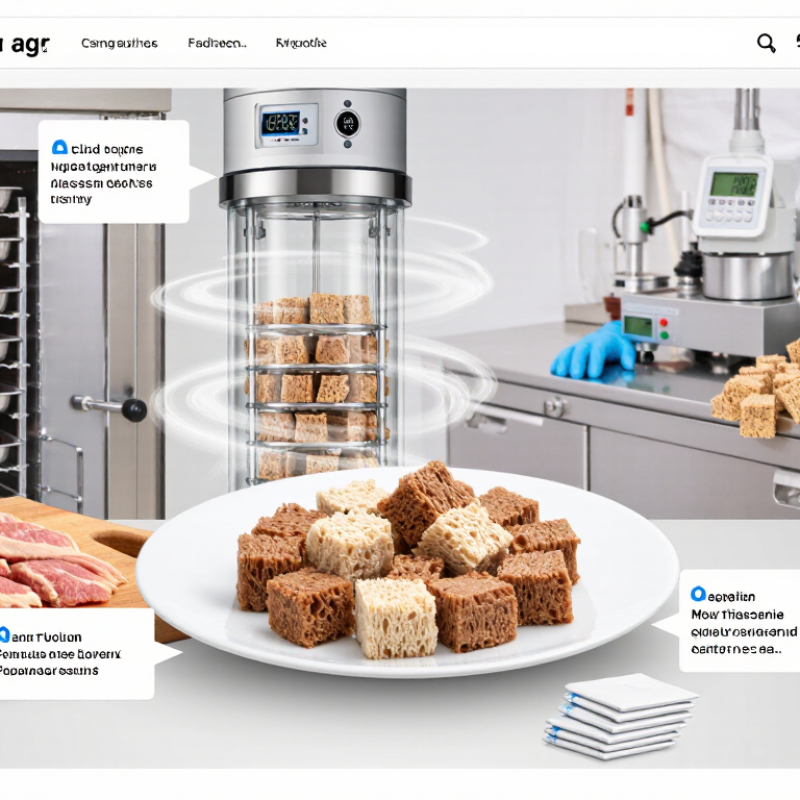
Freeze-dried duck is meat preserved by removing water from deeply frozen duck under vacuum. It is not jerky. That distinction matters. In freeze-drying, ice changes directly into vapor, leaving a porous, crisp piece with concentrated flavor. The meat often breaks softly between the fingers. USDA FoodData Central reports roughly 20 grams of protein per 100 grams of roasted duck meat and skin. Removing water does not create protein, but it reduces weight and concentrates nutrients per gram.
The process usually includes trimming, portioning, rapid freezing, primary drying, and secondary drying. During primary drying, gentle heat supports sublimation without melting the frozen structure. Secondary drying removes remaining moisture. Packaging must then limit oxygen and humidity. Otherwise, the pieces can soften quickly. Small batch differences are normal. Some pieces may feel airy, while others remain dense near the center.
Safety deserves careful attention. Freeze-drying alone does not reliably destroy pathogens. USDA Food Safety and Inspection Service guidance explains that freezing mainly stops microbial growth. It does not eliminate every microorganism. For cooked poultry, FDA Food Code guidance identifies 165°F (74°C) as a safe internal cooking temperature. A responsible producer validates its heat treatment, drying profile, water activity, and packaging controls. “Shelf-stable” should never mean risk-free. Storage instructions still matter, especially after opening. Clean hands and a dry scoop help prevent contamination. The simple part is drying. The difficult part is proving consistency.
Typical freeze-drying stages for duck meat: freezing, primary drying, and secondary drying.
Duck meat is first frozen to preserve its structure. During primary drying, low pressure allows ice to change directly into vapor through sublimation. Secondary drying removes remaining bound moisture, producing a lightweight product with a long shelf life when properly packaged. The values shown are representative process settings; exact temperatures and pressures vary by equipment, batch size, and formulation.
Duck preparation begins with inspection, trimming, and controlled chilling. Workers remove feathers, excess skin, visible fat, and bone fragments. The meat is then cut into even pieces, often around one to two centimeters thick. Consistent sizing matters because thick centers freeze and dry more slowly.
Small details make a difference.
USDA FoodData Central entries place raw duck meat near 70–75 grams of water per 100 grams, depending on the cut. That moisture must be removed carefully. Before processing, duck is commonly cooked to an internal temperature of 165°F (74°C), following USDA Food Safety and Inspection Service guidance. After cooking, the pieces are cooled quickly and arranged in a single layer on trays. Crowded trays can create uneven results.
The trays enter a freezer, often below -40°F (-40°C), until the meat becomes completely solid. A vacuum chamber then lowers pressure and applies gentle heat. Ice changes directly into vapor, rather than melting first. This sublimation step protects much of the meat’s shape, aroma, and texture. The process is not perfectly forgiving. Too much heat may darken the surface, while insufficient drying can leave hidden moisture inside. Packaging follows immediately, using moisture and oxygen barriers. A water-activity check is also valuable, because a dry surface does not always mean a stable interior.
Freeze-dried duck is duck meat with most of its water removed through sublimation. Ice changes directly into vapor, without becoming liquid. USDA FoodData Central lists roasted duck meat and skin at about 337 calories per 100 grams. Freeze-drying concentrates these nutrients by weight, but it does not create extra calories.
The process begins with inspection, trimming, and portioning. Pieces are frozen quickly, often below -30°C, to form smaller ice crystals. Smaller crystals help preserve texture. The frozen duck enters a vacuum chamber, where gentle shelf heat supports primary drying. Ice leaves the meat as vapor. This stage can take several hours. It is not cooking. USDA FSIS recommends poultry reach 165°F internally before eating, so manufacturers must validate a safe heat treatment separately.
Secondary drying follows. It removes moisture still attached to proteins and fibers. Operators monitor pressure, product temperature, and final water activity. The duck then cools inside the chamber before moisture-barrier packaging. Oxygen and humidity can damage crispness, flavor, and shelf life. FDA Food Code guidance treats time and temperature control as critical safety factors, while freeze-drying mainly improves stability. That distinction matters. A dry product may still carry hazards if handling or pre-treatment fails. I would not judge quality by crunch alone; laboratory water-activity results and controlled batch records provide stronger evidence.
Freeze-dried duck is made by freezing cooked duck and placing it in a vacuum chamber. Ice then changes directly into vapor, leaving most of the structure intact. The meat becomes light, dry, and easy to portion. It is not the same as dehydrated duck. Dehydration uses warmer air and may create a denser, chewier texture.
Its nutritional value remains fairly concentrated because water is removed, not protein or fat. A small serving can contain substantial calories. Duck also provides protein, iron, zinc, and vitamin B12. However, heat-sensitive nutrients may decline during cooking and processing. Seasoned products can contain considerable sodium. Check the ingredient list. Freeze-drying does not reliably destroy every harmful microorganism, so the duck should be fully cooked before processing. That safety detail is easy to overlook.
The texture is usually crisp, porous, and slightly brittle. Rehydrated duck becomes softer, but it may not recover its original juiciness. That is the imperfect part. Add cool or warm water gradually, then wait several minutes. Too much water can make the surface soggy. For storage, use an airtight, moisture-resistant container in a cool, dark cupboard. Oxygen absorbers may help when suitable for the packaging. Keep the food away from humidity. Once opened, use it promptly. A soft texture, strange odor, or visible moisture suggests poor storage, not improved freshness.
| Category | Typical Information | Practical Notes |
|---|---|---|
| Definition | Freeze-dried duck is duck meat that has been frozen and dehydrated under a vacuum so that ice changes directly into vapor. | The process removes most moisture while retaining much of the meat’s original shape, flavor, and nutrients. |
| Main raw material | Boneless or bone-in duck meat, usually trimmed and cut into pieces before processing. | The final nutrition and texture depend on the cut, skin content, fat level, and any added ingredients. |
| Step 1: Preparation | The duck is inspected, chilled, trimmed as needed, and cut into evenly sized portions. | Uniform pieces help moisture leave the product more evenly during drying. |
| Step 2: Freezing | The prepared duck is rapidly frozen, commonly to approximately -30°C to -50°C before vacuum drying. | Rapid freezing generally forms smaller ice crystals, which can help preserve the meat’s structure. |
| Step 3: Primary drying | Under reduced pressure, ice is removed by sublimation, changing directly from solid ice to water vapor. | This stage removes most of the frozen water without using high temperatures. |
| Step 4: Secondary drying | A controlled increase in temperature removes additional bound moisture from the meat. | The finished product is generally shelf-stable when adequately dried and properly packaged. |
| Typical moisture content | Approximately 2%–5% moisture in a properly freeze-dried product. | Actual moisture varies with the recipe, equipment, piece size, and drying endpoint. |
| Energy value | Approximately 400–550 kcal per 100 g of finished freeze-dried duck. | Calories are concentrated because most water has been removed; skin-on and fatty cuts are higher in calories. |
| Protein | Approximately 55–70 g per 100 g of finished product. | Duck provides complete animal protein containing all essential amino acids, although exact values depend on the cut. |
| Fat | Approximately 20–35 g per 100 g of finished product. | Duck skin and visible fat substantially increase the total fat content and energy density. |
| Carbohydrates | Usually 0–5 g per 100 g when made from plain duck meat without sauces, coatings, or fillers. | Seasonings, marinades, or starch-based ingredients can increase the carbohydrate content. |
| Sodium | Approximately 100–800 mg per 100 g, depending on whether salt or other seasonings are added. | Plain duck is typically much lower in sodium than seasoned or cured products. |
| Micronutrients | Duck naturally supplies nutrients such as iron, zinc, selenium, phosphorus, and vitamin B12. | Freeze-drying can preserve many nutrients, but the exact retention depends on processing conditions and storage time. |
| Texture | Lightweight, porous, crisp, and brittle when dry; softer and more meat-like after rehydration. | Fatty pieces may feel richer or slightly less crisp than lean pieces. |
| Flavor | Concentrated duck flavor with a savory, rich profile. | Because water is removed, both natural flavor and added seasoning may taste stronger per gram. |
| Rehydration | Place the product in clean water or broth for approximately 5–15 minutes, depending on piece size. | Rehydration is faster with smaller pieces and warm liquid; the texture may not exactly match freshly cooked duck. |
| Packaging requirements | Use moisture- and oxygen-barrier packaging, preferably sealed with an appropriate oxygen absorber when suitable. | Moisture and oxygen can cause softening, oxidation, flavor changes, and quality loss. |
| Unopened storage | Store in a cool, dry, dark place, ideally below 25°C, away from heat, sunlight, and humidity. | Shelf life varies by packaging and residual moisture; properly packaged products commonly last about 1–2 years. |
| After opening | Reseal immediately and use within several days to a few weeks according to the package instructions. | Discard the product if it develops moisture, mold, an unusual odor, or signs of rancidity. |
| Food-safety reminder | Freeze-drying does not reliably destroy all microorganisms or toxins. | Duck should be cooked safely before freeze-drying, and rehydrated food should be handled and refrigerated like other cooked meat. |
Nutritional figures are typical ranges for plain freeze-dried duck and can vary substantially with the cut, skin content, moisture level, seasoning, and processing method. Product-specific laboratory analysis or nutrition labeling should be used for exact values.
Freeze dried duck is meat preserved by removing water at very low temperatures. Producers usually trim the meat, freeze it quickly, and place it in a vacuum chamber. The ice then changes directly into vapor, leaving a light, crisp product with concentrated flavor. Proper processing can help preserve texture and nutrients, but it does not make poor-quality meat safe. Clean handling still matters.
Freeze dried duck is used in pet treats, travel food, training rewards, and some emergency meal supplies. It breaks into small pieces easily and needs little storage space. Keep it in a sealed, moisture-resistant package. Humidity can soften the pieces and encourage spoilage. Check the package date, smell, and texture before use. Discard meat that smells sour, feels damp, or shows mold.
A common mistake is assuming freeze drying kills every harmful microorganism. It usually does not. Raw or lightly processed duck may still carry pathogens, especially when handled carelessly. Wash hands after touching it, and keep it away from ready-to-eat foods.
For human consumption, cook rehydrated duck thoroughly using a food thermometer. Follow the product’s preparation instructions, because water quality and soaking time also affect safety. Pets should receive portions suited to their size and health.
Very young, elderly, pregnant, or medically fragile animals may need professional dietary advice. Even careful guidance has limits. Safety depends on the meat source, processing controls, packaging, and storage conditions.
It is duck meat with most water removed under vacuum. Frozen ice changes directly into vapor. It is not jerky. The pieces are usually crisp, porous, and light.
The meat is inspected, trimmed, portioned, and rapidly frozen. It then enters a vacuum chamber. Gentle heat removes ice during primary drying. Secondary drying removes remaining moisture.
Not necessarily. Freeze-drying does not reliably destroy harmful microorganisms. Duck should receive validated heat treatment before drying. Poultry is commonly heated to 165°F, or 74°C, internally.
No. It removes water, not creates nutrients. Nutrients become more concentrated by weight. Roasted duck contains roughly 20 grams of protein per 100 grams. Calorie concentration also increases.
Piece thickness, freezing speed, and moisture movement can differ. Small batch variations are normal. The center may remain denser. Texture alone does not prove quality.
Packaging should block oxygen and humidity. Otherwise, the pieces may soften quickly. A sealed moisture-barrier pouch works better than an open bowl. Keep unused portions dry.
Follow the package instructions carefully. Use clean, dry hands or a dry scoop. Reseal the package after each use. Moisture can damage crispness and encourage contamination.
No. Crunch only suggests low moisture. It does not prove safe processing. Water activity results, heat records, and packaging controls provide stronger evidence. I would not rely on texture alone.
Freeze Dried Duck is duck meat that has been carefully prepared, frozen, and dried in a low-pressure environment to remove moisture while preserving much of its original flavor, aroma, and nutrients. Before processing, the meat is cleaned, trimmed, cut into suitable portions, and thoroughly cooked or otherwise handled according to safe food-preparation practices. It is then frozen solid, placed in a vacuum chamber, and gently heated so the ice changes directly into vapor without passing through a liquid stage.
The finished product is lightweight, crisp or porous in texture, and can often be rehydrated with water to create a softer consistency. Its nutritional value depends on the cut and preparation method, but it generally provides protein and concentrated flavor. To maintain quality, it should be kept in an airtight, moisture-resistant container in a cool, dry place. Freeze Dried Duck may be used in snacks, recipes, travel meals, or pet food when produced and handled safely. Always follow proper storage guidance and check for spoilage before use.

GAGA