How to Source Freeze Dried Salmon in Bulk Worldwide?

Time:2026-09-11 Author:Ethan
0%

Sourcing Freeze Dried Salmon Bulk worldwide requires more than comparing prices on a supplier list. Product quality can change with salmon species, harvest area, processing temperature, and packaging conditions. A dependable sourcing plan begins with clear specifications. Define whether the salmon is intended for human food, pet food, treats, or ingredient production. These categories may require different certifications and labeling controls.

Ask suppliers for product samples, technical data sheets, allergen statements, certificates of analysis, and traceability records. Check moisture content, protein levels, piece size, texture, odor, and rehydration performance. A practical test matters. Place several pieces in a clean container and inspect their color, crispness, and aroma after opening. The results may reveal problems that photographs cannot show.

Worldwide purchasing also depends on reliable logistics. Confirm production capacity, minimum order quantities, lead times, pallet configuration, and export documentation. Review packaging carefully, especially moisture barriers and resealable inner bags. A damaged carton can affect an entire shipment. Import requirements differ by destination, so buyers should verify customs, food safety, labeling, and quarantine rules with qualified local professionals.

Do not trust impressive claims alone.

An experienced supplier should explain its freeze-drying process clearly and answer difficult questions without hesitation. Independent laboratory testing can strengthen confidence, particularly for microbial safety, heavy metals, and nutritional accuracy. Still, no supplier is perfect. Delays, seasonal variation, and specification misunderstandings can happen. Therefore, use written purchase agreements, approved samples, inspection checkpoints, and backup suppliers. This guide examines each stage, helping international buyers source consistently while recognizing the practical weaknesses that careful procurement must manage.
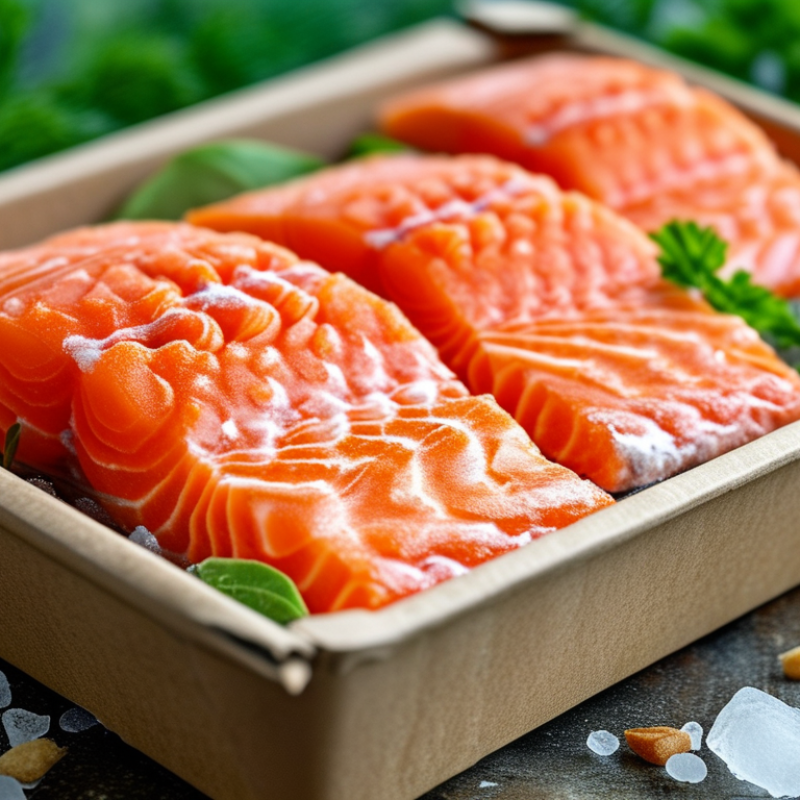
How to Source Freeze Dried Salmon in Bulk Worldwide?

Define Bulk Freeze-Dried Salmon Specifications and Quality Standards

Bulk freeze-dried salmon sourcing begins with a precise product definition. Specify the species, harvest area, farmed or wild origin, and approved production countries. Describe the cut, particle size, color range, and acceptable bone content. Requirements may differ for pet food, human food, and supplements. Keep those uses separate.

Set measurable targets for moisture and water activity, not appearance alone. A practical specification may require moisture below 5% and water activity below 0.30, subject to validation. State protein minimums, fat range, salt limits, and rehydration performance. The numbers should match your application.

Quality standards need evidence. Request a batch-specific certificate of analysis, production date, lot code, net weight, and test methods. Review microbiological results for Salmonella, Listeria, yeast, and mold. Add heavy-metal, oxidation, and allergen controls where relevant. Packaging should be oxygen-barrier, sealed, food-grade, and suitable for international transport. Ask for shelf-life data under stated storage conditions. Before committing to a container, inspect representative samples. Check crispness, odor, color, powdering, and rehydrated texture. I have found that attractive pieces can hide uneven drying. Easy to miss. Require traceability from raw fish to final carton, with corrective-action records for failed batches. Confirm cold-chain handling before freeze-drying and humidity control afterward. One weakness remains: a certificate cannot replace independent verification. Use periodic third-party testing when origins, seasons, or processing sites change.

Identify Reliable Worldwide Salmon Suppliers and Sourcing Regions

How to Source Freeze Dried Salmon in Bulk Worldwide?

Reliable sourcing begins with the salmon’s origin, not the lowest quotation. Norway remains a major farmed-salmon region, while Chile, Scotland, the Faroe Islands, Canada, and Australia offer additional supply options. The Norwegian Directorate of Fisheries reported approximately 1.56 million tonnes of farmed salmon and rainbow trout sold in 2023. This scale supports regular bulk purchasing, but volume alone proves little. Supplier records, processing capacity, and export experience still require verification.

The 2024 OECD-FAO Agricultural Outlook expects aquaculture to provide about 55% of global aquatic animal production by 2033. This trend supports stable farmed-salmon sourcing. However, buyers should compare feed practices, farming waters, harvest seasons, and species identification. Ask for lot-level traceability. Check the harvest date, origin statement, moisture level, water activity, protein content, and microbial test results. Freeze-drying removes water. It does not correct poor handling.

Request samples from at least three regions. Inspect color, brittle texture, fish aroma, and rehydration performance. Tiny details matter. Confirm packaging integrity and oxygen-control procedures before signing a contract. The FAO’s 2024 State of World Fisheries and Aquaculture also highlights the growing importance of traceability and responsible production. I would not treat a polished certificate as complete proof. Some documents are outdated, incomplete, or copied between lots. An independent laboratory test before shipment is usually worth the delay, especially for private-label or nutraceutical production.

Evaluate Supplier Certifications, Product Testing, and Traceability

How to Source Freeze Dried Salmon in Bulk Worldwide?

Supplier certification is a starting point, not proof of consistent quality. Request current certificates covering the exact production site and freeze-dried salmon process. Check scope, expiry dates, audit findings, and corrective actions. Food safety systems should address sanitation, allergen control, pest management, and temperature records. Certifications may differ by destination, so confirm import requirements before signing a contract.

Ask for independent laboratory reports from recent production lots. Useful tests include Salmonella, Listeria, heavy metals, moisture, water activity, oxidation, and nutritional values. Match every report to a lot number, production date, and sample method. A clean report is helpful. It does not replace your own verification. Consider pre-shipment testing, especially for the first order or a new harvest season. Test specifications should also reflect the final use, such as pet food, supplements, or human consumption.

Traceability should work in both directions. The supplier should identify the salmon species, harvest or farming origin, processing date, drying batch, packaging materials, and shipment records. Request a mock recall exercise. Can they locate affected cartons within hours? Inspect labels, seals, and pallet records when possible. Digital records are useful, but handwritten corrections still deserve attention. I have seen complete-looking files hide sampling gaps. That weakness should be discussed openly, not ignored. A small pilot shipment can reveal moisture changes, broken pieces, odor, and packaging damage before a full bulk purchase.

Compare Pricing, Minimum Orders, Packaging, and Shipping Options

When sourcing freeze dried salmon in bulk, compare the delivered cost per kilogram, not just the factory quote. A low price may exclude testing, inner cartons, freight, or customs charges. Request pricing at several volumes, such as 50, 200, and 1,000 kilograms. This reveals how quickly the unit price changes. I have found that larger orders can reduce packaging and production costs, but they also increase storage pressure. A cheaper shipment is not always the better decision.

Minimum order quantities vary by cut, powder size, and private packaging requirements. Standard products usually allow smaller trial orders. Custom labels, special shapes, or unusual formulas may require a higher minimum. Ask whether the minimum applies per flavor, package size, or total order. Keep a written specification for salmon origin, moisture level, piece size, and testing documents. Details get lost easily. That is a real sourcing risk.

Packaging should protect the product from oxygen, moisture, light, and crushing. Compare bulk liners, vacuum pouches, and retail-ready bags. Check net weight, carton strength, pallet dimensions, and recycling requirements. For shipping, air freight suits samples and urgent replenishment, while sea freight usually lowers cost for stable, large orders. Confirm transit time, port handling, insurance, customs responsibilities, and temperature exposure. Freeze dried food does not need frozen transport, but humid containers can still damage texture. Request a sample shipment before committing to a full container. It may delay the purchase, yet it can reveal weak seals, broken pieces, or inaccurate weights.

Manage Import Compliance, Storage, and Long-Term Supply Agreements

Import compliance begins before the salmon leaves the processing facility. Confirm the correct tariff classification with a qualified customs broker. Requirements differ across destination countries. Request the product specification, ingredient statement, allergen declaration, health certificate, and lot-level traceability records. Packaging should show net weight, production date, expiry date, and storage instructions. Keep records.

A reliable supplier should explain its drying process and moisture controls. Ask for recent laboratory results covering microbiological safety, heavy metals, and oxidation indicators. Confirm whether the product requires special permits or pre-arrival notifications. Storage conditions matter after arrival. Use sealed, oxygen-barrier packaging in a cool, dry warehouse. Avoid direct sunlight and repeated temperature changes. Humidity can damage texture quickly. That detail is easy to miss.

Long-term supply agreements need more than a fixed price. Define product grade, cut size, moisture range, packaging format, minimum order quantity, lead time, and acceptable defect limits. Include inspection rights and a clear process for rejected lots. Price-adjustment clauses can address raw material and freight changes. Set review dates every six or twelve months. Include recall cooperation and traceability duties. One weak point remains: forecasts are never perfect. A flexible delivery schedule may protect both sides better than aggressive volume commitments. Before signing, compare the contract with actual warehouse capacity, import timing, and sales demand. Otherwise, a “secure” supply may become expensive stock.

FAQS

: What details should a bulk freeze-dried salmon specification include?

: State the species, farming or wild origin, harvest area, and approved production country. Define the cut, particle size, color range, and acceptable bone content. Keep human food, pet food, and supplement requirements separate. Details matter.

Which moisture and water activity levels are practical?

A practical target may be below 5% moisture and below 0.30 water activity. Validate these limits for the intended application. Also specify protein, fat, salt, and rehydration performance. Appearance alone is insufficient.

Which salmon sourcing regions can support bulk supply?

Common sourcing regions include Norway, Chile, Scotland, the Faroe Islands, Canada, and Australia. Large production volumes can support regular purchasing. They do not prove quality. Verify capacity and export experience.

What should buyers inspect in freeze-dried salmon samples?

Check crispness, fish aroma, color, powdering, and broken pieces. Rehydrate samples and inspect their texture. Uneven drying may remain hidden inside attractive pieces. Easy to miss.

Which tests should accompany each production lot?

Request results for Salmonella, Listeria, yeast, mold, heavy metals, moisture, and water activity. Oxidation and nutritional testing may also be relevant. Match every report with the lot number and production date. A clean report is helpful.

How can buyers evaluate supplier certifications?

Check the production site, certificate scope, expiry date, audit findings, and corrective actions. Confirm sanitation, allergen control, pest management, and temperature records. Certification is a starting point, not proof of consistency. That limitation matters.

What traceability records should a supplier provide?

Records should connect the fish species, origin, processing date, drying batch, packaging, and shipment. Ask for a mock recall exercise. The supplier should locate affected cartons quickly. Test the system.

What packaging and storage controls are important?

Use sealed, food-grade packaging with strong oxygen barriers. Confirm suitability for international transport and stated storage conditions. Review shelf-life data and humidity controls after drying. Packaging damage can ruin crisp texture.

Is independent laboratory testing necessary before a large order?

Independent testing is especially useful for a first order or new harvest season. Test representative samples before shipment when possible. A certificate cannot replace verification. I would not rely on paperwork alone.

Conclusion

Sourcing Freeze Dried Salmon Bulk worldwide requires a clear understanding of product specifications, quality expectations, and supply requirements. Buyers should define the desired salmon species, cut, particle size, moisture level, shelf life, nutritional profile, and packaging format before contacting suppliers. Reliable sourcing regions should be assessed based on raw material availability, processing capability, export experience, and supply consistency. Suppliers should also provide relevant certifications, laboratory testing, batch records, and traceability documentation to support product safety and quality verification.

A complete purchasing evaluation should compare pricing, minimum order quantities, lead times, packaging protection, and shipping methods. Buyers must also review import documentation, labeling requirements, customs procedures, storage conditions, and temperature or humidity controls where applicable. For long-term cooperation, written supply agreements should define quality standards, delivery schedules, inspection procedures, payment terms, and procedures for handling nonconforming goods. This structured approach can reduce sourcing risks and support a stable international supply of freeze-dried salmon.


Ethan

Ethan

Ethan is a seasoned marketing professional with a deep expertise in our company's innovative product line. With a passion for sharing knowledge and insights, he takes the lead in regularly updating our corporate blog, where he explores industry trends, product features, and effective marketing......