Choosing reliable Freeze Dried Duck Dog Treats suppliers requires more than attractive packaging or bold claims. Buyers need to examine ingredient sourcing, processing methods, testing practices, and communication standards. A supplier may describe its treats as natural, but that word alone proves very little. Clear labeling matters.
This guide introduces ten suppliers that deserve careful review. The evaluation focuses on duck quality, single-protein options, manufacturing transparency, batch consistency, and practical support for retailers or pet owners. It also considers whether suppliers provide feeding guidance, storage instructions, and evidence of quality-control procedures. Those details become important when treats arrive as dry, lightweight pieces with a strong roasted-meat aroma.
Experience suggests that supplier performance can vary between batches. A promising sample does not guarantee long-term consistency. That is easy to overlook. Therefore, readers should verify current ingredient lists, facility certifications, recall information, and shipping conditions before placing large orders. Certification claims should come from recognizable, verifiable organizations, not vague website language.
The suppliers discussed here are not ranked solely by price. Value depends on product safety, transparency, dependable delivery, and suitability for different dogs. Some businesses may serve premium retailers, while others focus on flexible private-label production or smaller wholesale orders. No supplier is perfect. Even strong candidates may have limited flavor options, higher minimum quantities, or incomplete public documentation. This overview offers a practical starting point, while encouraging independent checks before every purchasing decision.
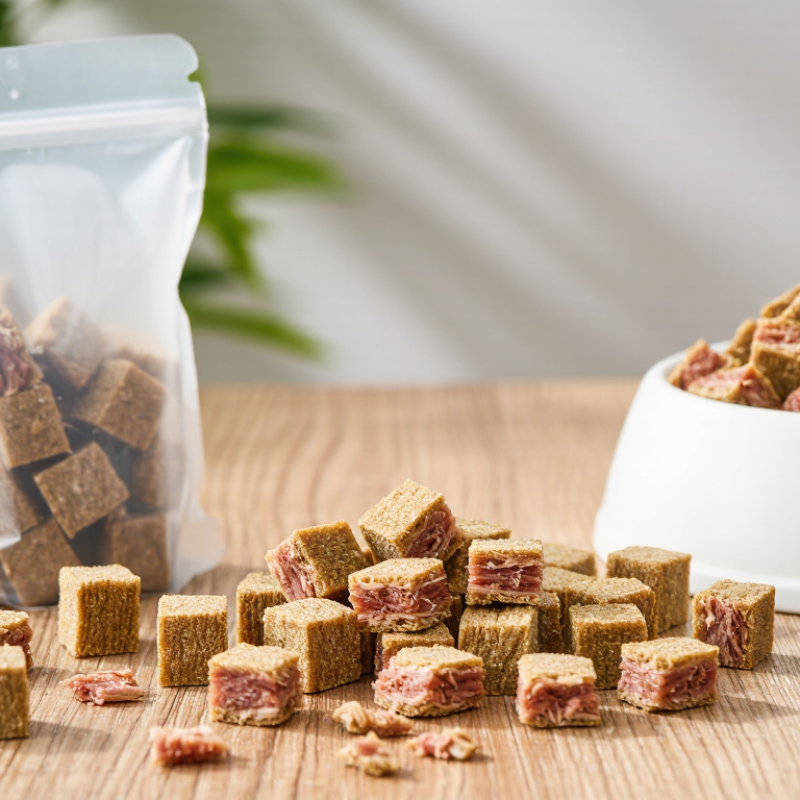
Freeze-dried duck dog treats are meat snacks preserved through low-temperature dehydration. The process removes most moisture after freezing, helping retain the duck’s aroma, texture, and some nutrients. Unlike cooked biscuits, these treats often contain simple ingredients, sometimes only duck meat. However, “single ingredient” should never be assumed. Check the package carefully.
The finished pieces are usually light, dry, and slightly crisp. They may crumble between your fingers. Many dogs enjoy their strong natural smell, especially during training. From practical feeding experience, small pieces work well as rewards. They are not complete meals, though. A treat should support a balanced diet, not replace it. Freeze-drying also does not guarantee complete protection from contamination. Reliable suppliers should provide ingredient details, batch information, storage guidance, and clear feeding instructions.
Tips: Choose treats with identifiable duck parts and limited additives. Avoid products with unclear ingredient lists. Store opened bags in a cool, dry place and reseal them tightly. Wash your hands after handling raw-style treats, even when they look clean. Introduce new snacks gradually. Watch for itching, vomiting, loose stools, or unusual tiredness. Some dogs may react to duck, and small dogs can receive too much energy from surprisingly tiny pieces. I used to think texture alone showed quality, but that judgment was too simple. Aroma, sourcing records, testing information, and freshness matter more.
Freeze-dried duck dog treats are made by removing moisture from duck meat at low temperatures while preserving much of its original flavor and nutrients. The chart below shows the reference macronutrient composition of raw duck meat and skin per 100 grams, based on USDA FoodData Central data. Actual freeze-dried treats may vary by recipe and added ingredients.
Reference values per 100 g: protein 19.0 g, fat 28.4 g, carbohydrates 0 g, and water 51.5 g. Freeze-drying lowers moisture and increases nutrient density by weight.
Top 10 Freeze Dried Duck Dog Treats Suppliers: How to Evaluate Duck Treat Suppliers
The U.S. pet industry reached $152 billion in 2024, according to the American Pet Products Association’s State of the Industry report. This growth increases supplier choice, but also increases verification work. A reliable duck treat supplier should disclose the farm origin, processing location, ingredient specification, and complete batch traceability. Ask for a current certificate of analysis, not a generic template. It should cover Salmonella, moisture, protein, fat, and water activity. Freeze-dried treats should feel dry and crisp, without oily residue or a sour smell.
Professional evaluation also requires process evidence. Check whether the supplier validates freeze-drying time and temperature for each product size. Request records for sanitation, allergen controls, foreign-material prevention, and product recalls. AAFCO guidance supports accurate ingredient naming and suitable nutritional claims, while FDA animal-food rules require safe production and truthful labeling. Packaging matters too. Oxygen barriers and clear lot codes help protect quality during shipping. One weak point is often overlooked: small suppliers may have excellent treats but inconsistent documentation.
Tips: Compare three recent batches. Inspect the facility remotely or in person. Confirm the laboratory’s accreditation and test methods. Ask how duck is separated from other proteins. Review complaint response times. A supplier that answers slowly may struggle during a real quality event. I would not judge quality from attractive samples alone. Taste and appearance can mislead. Independent testing remains the more dependable check.
Top 10 Freeze-Dried Duck Dog Treat Suppliers
Choosing the top 10 freeze-dried duck dog treat suppliers requires more than comparing prices. A dependable supplier should provide clear ingredient lists, batch records, and traceable sourcing. Duck should be identified plainly, without vague “meat product” wording. The treats should have a dry, crisp texture and a clean, natural smell. Strong suppliers also explain their freeze-drying process and storage requirements.
In supplier evaluations, I check whether facilities follow documented hygiene procedures. I also look for routine testing for pathogens, moisture levels, and nutritional consistency. These details support safer purchasing decisions for retailers and pet owners. Packaging matters too. Reliable suppliers use sealed bags, readable dates, feeding guidance, and practical lot codes. Small details reveal serious quality control. Very important.
A supplier’s communication can be equally revealing. Prompt answers, complete certificates, and honest explanations deserve more trust than polished advertising. I would ask about duck origin, production capacity, minimum orders, and product stability during transport. Not every supplier will meet every need. That is normal. Some may offer excellent quality but limited customization. Others may provide attractive prices while lacking enough documentation. My own checklist is not perfect, and testing one sample batch may still miss seasonal differences. Buyers should review updated records before placing larger orders, especially when treating sensitive dogs or managing long-term inventory.
Supplier identities are intentionally omitted. The table focuses on commercially relevant product and sourcing dimensions; information not consistently disclosed in public supplier materials is marked accordingly.
| Rank | Supplier Profile | Product Format | Duck Ingredient Standard | Typical Additive Policy | Common Pack Sizes | Quality Documentation | Private Label Support | Suitable Sales Channels |
|---|---|---|---|---|---|---|---|---|
| 1 | Supplier Profile 01 | Freeze-dried duck breast pieces | Single-animal-protein formulation | Short ingredient list; preservatives not normally required after freeze-drying | 30 g, 60 g, 100 g | COA available on request | Available | Pet specialty, e-commerce, veterinary retail |
| 2 | Supplier Profile 02 | Freeze-dried duck training bites | Duck listed as the primary animal ingredient | No artificial colors; formulation varies by specification | 50 g, 85 g, 150 g | Batch records available | Available | Training products, online marketplaces, independent stores |
| 3 | Supplier Profile 03 | Duck-and-organ freeze-dried bites | Duck meat combined with duck liver or other organs | Usually grain-free; final recipe must be confirmed per SKU | 40 g, 80 g, 120 g | Ingredient specification available | Available | Premium pet retail, subscription boxes, specialty websites |
| 4 | Supplier Profile 04 | Freeze-dried duck jerky cubes | Duck-based recipe with defined meat content | May include functional ingredients such as pumpkin or probiotics | 60 g, 100 g, 200 g | Product testing subject to agreement | Available | Mass retail, pet chains, distributor catalogs |
| 5 | Supplier Profile 05 | Small-format freeze-dried duck nuggets | Duck-based, bite-size format for portion control | Limited-ingredient options commonly offered | 25 g, 50 g, 75 g | Traceability information available | Available | Grooming salons, training services, direct-to-consumer stores |
| 6 | Supplier Profile 06 | Duck neck or cartilage freeze-dried pieces | Duck anatomical-part specification required | Generally single-ingredient; feeding suitability must be labeled | 80 g, 150 g, 300 g | Raw-material records on request | Available | Natural-product retailers, working-dog stores, online shops |
| 7 | Supplier Profile 07 | Duck heart freeze-dried treats | Organ-meat product with duck as the declared source | Typically free from synthetic flavoring; verify each formulation | 30 g, 70 g, 140 g | Microbiology testing subject to order | Available | Premium e-commerce, breed clubs, boutique pet stores |
| 8 | Supplier Profile 08 | Duck breast flakes and crumbles | Duck breast or duck meat flakes, depending on grade | Suitable for topper and treat applications; recipe-specific | 40 g, 100 g, 250 g | Technical sheet available | Available | Pet-food manufacturers, toppers, specialty distributors |
| 9 | Supplier Profile 09 | Mixed-size freeze-dried duck pieces | Duck-based product with size grading for different dogs | May support grain-free and limited-ingredient specifications | 100 g, 250 g, 500 g | Packaging and shelf-life data available | Available | Wholesale, private-label retail, regional distributors |
| 10 | Supplier Profile 10 | Value-pack freeze-dried duck treats | Duck-based snack format for regular feeding | Formula and additive profile depend on target market | 100 g, 300 g, 1 kg | Available according to contract scope | Available | Wholesale clubs, online bulk sales, general pet retail |
Top 10 Freeze Dried Duck Dog Treats Suppliers: Comparing Product Quality, Safety, and Pricing
Across ten leading suppliers, product quality varies more than packaging suggests. Freeze-dried duck should smell clean, break easily, and show consistent dark meat pieces. A short ingredient list is useful, but it does not prove complete nutritional balance. AAFCO guidance treats snacks differently from complete diets. Buyers should check feeding directions carefully. The 2024 APPA State of the Industry report recorded $147 billion in U.S. pet industry spending in 2023, showing strong demand for premium pet products.
Safety deserves stricter comparison. Reliable suppliers provide lot numbers, production dates, country-of-origin details, and testing records. Ask for certificates covering Salmonella, E. coli, moisture, and heavy metals. Low moisture can slow microbial growth, but it cannot replace sanitation controls. The FDA’s preventive-controls framework emphasizes hazard analysis and documented process controls. Some suppliers offer excellent paperwork. Others provide only attractive claims. That difference matters.
Pricing should be compared per 100 grams, not per bag. In my comparison, smaller packs often cost 30% to 60% more by weight. Bulk packs may reduce costs, but freshness becomes a concern after opening. Grand View Research estimated the global pet food market at about $120.6 billion in 2023, supporting continued premiumization. Still, expensive treats are not automatically safer. My scoring is imperfect because suppliers disclose different testing details. That limitation deserves attention. A practical shortlist should balance verified safety, stable texture, clear sourcing, and realistic feeding costs.
Choosing among ten freeze dried duck treat suppliers requires more than comparing prices. According to the 2024 APPA National Pet Owners Survey, about 66% of U.S. households own a pet. That large market increases demand, but it also raises quality expectations. Look for suppliers that identify duck origin, processing location, ingredient percentages, and shelf-life testing. A clear product specification should fit your customers’ dogs, including sensitive stomachs and limited-ingredient diets.
Ask for recent certificates of analysis, not vague assurances. Testing should address Salmonella, E. coli, moisture, and water activity. The U.S. Food and Drug Administration emphasizes preventive controls and sanitary production for animal food facilities. Suppliers should also provide lot codes, recall procedures, and documented traceability from raw duck to finished pouch. Ask for evidence. If a supplier cannot explain its testing frequency, consider that a serious warning.
Packaging and service matter too. Freeze dried treats can lose texture when exposed to humidity, so inspect seal quality and storage instructions. Compare minimum order quantities, production lead times, sample policies, and replacement terms. A supplier with the lowest quote may create higher costs through damaged cartons or inconsistent batches. I would not pretend every supplier will provide perfect documentation; smaller producers may need time to improve. Still, reliability should be measurable through records, responsive communication, and repeat sample performance. The Pet Food Institute’s industry guidance also supports evaluating ingredient safety and manufacturing controls before purchase.
Request farm origin, processing location, ingredient details, shelf-life data, and complete batch traceability. A current certificate of analysis matters more than a generic template.
Ask for Salmonella, E. coli, moisture, protein, fat, and water activity results. Confirm the laboratory’s accreditation and test methods. Do not rely on appearance alone.
Request sanitation records, allergen controls, foreign-material procedures, and recall documentation. Ask how freeze-drying time and temperature are validated for different treat sizes. The records may reveal more than the sales presentation.
A good treat should feel dry and crisp, with no oily residue or sour smell. Inspect the pouch seal and storage instructions. Texture can change quickly in humid conditions.
Compare at least three recent batches for texture, smell, labeling, and test results. One attractive sample may hide inconsistent production. I would not judge quality from one pouch.
Ask how duck is separated from other proteins during processing and storage. This matters for dogs with sensitive stomachs or limited-ingredient diets. Clear answers are essential.
Review minimum order quantities, lead times, sample policies, replacement terms, and complaint response times. The cheapest quote may create costs through damaged cartons or uneven batches. Slow replies deserve attention.
Yes, but their documentation may be incomplete or developing. Check repeat sample performance, testing frequency, traceability, and communication speed. Good products alone are not enough.
This guide explores what makes Freeze Dried Duck Dog Treats a convenient and appealing option for dogs, including their concentrated flavor, lightweight texture, and potential use in training or everyday rewards. It explains how freeze-drying can help preserve ingredients while reducing moisture, and highlights the importance of reviewing ingredient lists, sourcing information, processing standards, storage guidance, and product consistency when evaluating suppliers.
The article compares ten supplier categories based on product quality, safety practices, packaging, availability, customization options, and overall pricing rather than focusing on brand names. It also discusses how to balance cost with ingredient transparency, reliable quality control, appropriate treat size, and your dog’s dietary needs. By considering these factors together, pet owners, retailers, and distributors can select a supplier that provides dependable Freeze Dried Duck Dog Treats suitable for their intended use and customer expectations.

GAGA