Why Choose Freeze Dried Duck Liver Treats? The answer begins with nutrition, convenience, and careful sourcing. APPA’s 2023–2024 National Pet Owners Survey reports that 66% of U.S. households own a pet. This growing market demands treats with clear purpose, not attractive packaging alone.
Freeze Dried Duck Liver Treats offer concentrated flavor and protein in a lightweight form. Their crisp texture can support training, enrichment, or meal toppers. The strong aroma may also encourage reluctant eaters. However, liver is rich in vitamin A and calories. Portion control matters. Veterinary nutritionist Dr. Lisa M. Freeman advises, “Treats should make up no more than 10% of your pet’s daily calorie intake” (Tufts Cummings Petfoodology). That simple rule deserves more attention.
Quality remains the real decision point. Look for named duck liver, transparent sourcing, batch testing, and clear feeding guidance. FDA guidance warns that raw animal ingredients may carry pathogens, and freeze-drying does not guarantee their complete removal. Responsible brands should explain their handling and testing practices. Grand View Research’s pet food market analysis also identifies premiumization and functional nutrition as important consumer trends, but market growth does not prove every product is safe or beneficial.
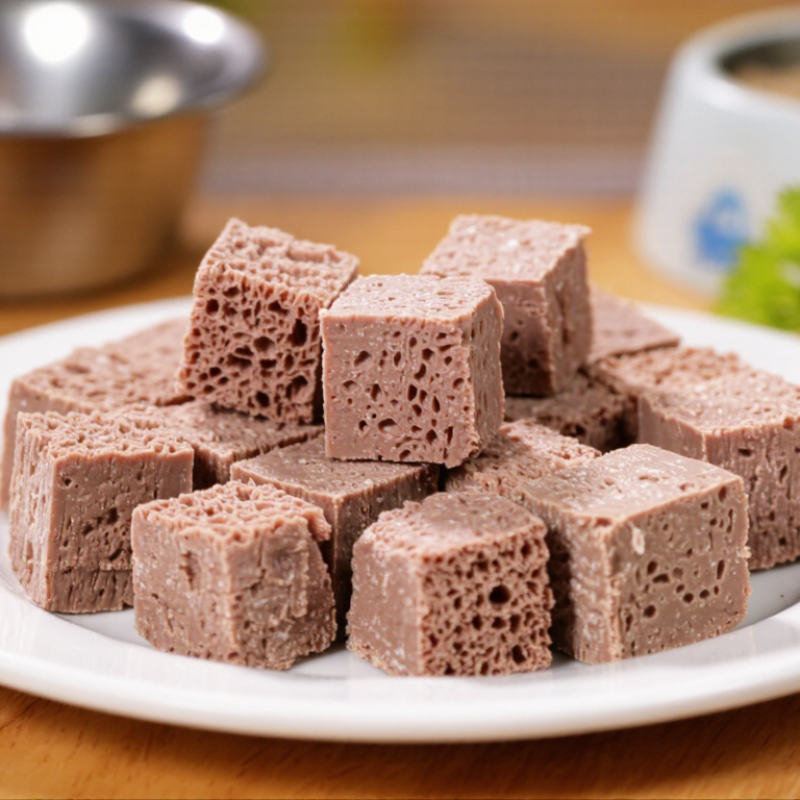
The case is strong, but not perfect. Some pets may gain little from organ-based treats. Others may need veterinary guidance because of allergies, obesity, or medical conditions. A small cube beside a stainless-steel bowl can be useful, yet moderation and evidence should lead the choice.
What Are Freeze-Dried Duck Liver Treats?
Freeze-dried duck liver treats are small pieces of duck liver preserved by removing moisture in a low-temperature vacuum process. This method helps retain the liver’s natural aroma, rich flavor, and soft nutritional profile without adding preservatives or artificial coloring. The result is a dry, lightweight treat with a crisp texture that often becomes tender when mixed with water.
They are lightweight. Not a complete diet. Duck liver naturally provides protein, vitamin A, iron, and other nutrients, but it is also rich and should remain an occasional reward. Small pieces work well during training, especially for dogs that ignore ordinary biscuits. Cats may also respond to the strong scent. In my experience, crumbling a piece over regular food can encourage interest, although every pet reacts differently.
A trustworthy product should clearly identify duck liver as the main ingredient and provide storage guidance, batch information, and feeding instructions. Freeze-drying does not make careless handling acceptable. Keep treats sealed, dry, and away from heat. Wash your hands after handling them, especially before preparing human food. Introduce tiny portions first and watch for vomiting, loose stool, or unusual itching. Pets with liver conditions, vitamin sensitivities, or restricted diets may need veterinary advice before receiving these treats. They are convenient, but not automatically suitable for every animal.
How Freeze-Drying Preserves Duck Liver’s Nutrients and Flavor
Why Choose Freeze Dried Duck Liver Treats?
How Freeze-Drying Preserves Duck Liver’s Nutrients and Flavor
I once assumed all dried treats tasted nearly the same. Duck liver changed my mind. Its savory aroma remains noticeable, even after the moisture disappears. Freeze-drying uses low temperatures and reduced pressure to remove water gently. This process helps preserve the liver’s shape, color, and natural taste better than intense heat can. The result is a light, crisp treat with a rich smell that many dogs notice immediately.
Freeze-drying may also help retain heat-sensitive nutrients, including some vitamins and proteins. It does not preserve everything perfectly, though. Processing, storage time, and packaging still matter. That detail is easy to overlook. Duck liver is nutrient-dense, so small portions are usually more sensible than unlimited feeding. I prefer breaking larger pieces into training rewards and watching the dog’s overall diet.
The texture offers another practical advantage. A dry piece is easy to carry, measure, and store without greasy residue. However, it can crumble during travel, and some dogs may swallow pieces too quickly. Fresh drinking water should remain available. Store the treats in a cool, dry place, and follow the package’s storage guidance. For dogs with medical conditions or restricted diets, a veterinarian can help assess whether liver treats are appropriate.
Key Nutritional Benefits of Duck Liver for Pets
Why Choose Freeze-Dried Duck Liver Treats?
Key Nutritional Benefits of Duck Liver for Pets
Duck liver offers an unusually dense package of animal-based nutrients. USDA FoodData Central reports that 100 grams of raw duck liver provides about 18.7 grams of protein, 4.6 grams of fat, and 136 calories. It also contains approximately 30.5 milligrams of iron and 54 micrograms of vitamin B12. These nutrients support oxygen transport, normal energy metabolism, and healthy red blood cell production. Small pieces can deliver a lot.
Vitamin A is the more complicated benefit. The same USDA data lists roughly 11,984 micrograms of vitamin A per 100 grams. Vitamin A supports vision, skin, and immune function, but excessive intake may create health risks. The National Research Council’s Nutrient Requirements of Dogs and Cats explains why nutrient balance matters more than simply adding “healthy” ingredients. Duck liver should stay a treat, not replace a complete diet.
Freeze-drying removes moisture while preserving much of the ingredient’s original structure and flavor. It also concentrates nutrients by weight. That means a pea-sized piece may be more substantial than it looks. My practical caution is simple: portions need measuring, especially for small dogs and cats. WSAVA nutrition guidance supports keeping treats below 10% of daily calories. Data can vary with the animal, recipe, and processing method. Less is often wiser.
Why Choose Freeze Dried Duck Liver Treats? - Key Nutritional Benefits of Duck Liver for Pets
| Nutritional Component |
Approximate Amount per 100 g Raw Duck Liver |
Potential Benefit for Pets |
Freeze-Dried Treat Consideration |
| Energy |
Approximately 130–140 kcal |
Provides concentrated energy in a small treat portion. |
Removing water makes the product lighter and more calorie-dense by weight, so small portions are appropriate. |
| Protein |
Approximately 18 g |
Supplies amino acids that support normal muscle maintenance and body tissues. |
Freeze-drying can preserve the food’s structure and concentrates protein per gram of finished treat. |
| Vitamin A |
Approximately 9,000–11,500 µg RAE |
Supports normal vision, skin, immune function, and cell development. |
Because liver is naturally very high in vitamin A, it should be offered as an occasional treat rather than a large daily food portion. |
| Vitamin B12 |
Approximately 50–55 µg |
Contributes to normal red blood cell formation, nervous-system function, and energy metabolism. |
A useful naturally occurring nutrient in animal-based treats; actual levels vary with the source animal and processing. |
| Iron |
Approximately 20–30 mg |
Helps support hemoglobin production and normal oxygen transport. |
The concentrated nature of freeze-dried liver makes portion control important, especially for small pets. |
| Copper |
Approximately 0.4–0.7 mg |
Supports connective-tissue formation, iron metabolism, and normal pigmentation. |
Liver is a nutrient-dense organ meat, so treats should complement—not replace—a complete and balanced diet. |
| Fat |
Approximately 4–5 g |
Provides energy and contributes to palatability. |
Check the feeding amount because water removal increases nutrients and calories per unit of weight. |
| Moisture |
Approximately 65–70% |
Fresh liver naturally contains substantial water. |
Freeze-drying removes most moisture without using the high temperatures associated with conventional cooking, helping create a lightweight, shelf-stable treat. |
|
Important feeding note: Nutrient values are approximate reference values for raw duck liver and may vary by animal, preparation, moisture level, and processing. Treats should generally remain a small portion of a pet’s daily calorie intake. Excessive liver feeding may provide too much vitamin A, so follow the product’s feeding guidance and consult a veterinarian for pets with medical conditions or special dietary needs.
|
Reference basis: approximate food-composition values for raw duck liver; freeze-dried product values are more concentrated because most water has been removed.
Why Pets May Prefer the Taste and Texture
Why Choose Freeze Dried Duck Liver Treats?
Pets may prefer freeze dried duck liver because it offers a strong aroma and a light, brittle texture. Freeze drying removes moisture under low pressure and temperature. This process can preserve flavor compounds better than ordinary heat drying. When a piece cracks between the teeth, it creates a noticeable sensory contrast. Some dogs enjoy that crisp snap. Cats may respond to the concentrated meat aroma.
This preference is possible, not guaranteed. Animal taste differs with age, health, and past feeding experience. APPA’s 2023–2024 National Pet Owners Survey reports that 66% of U.S. households own a pet. FEDIAF’s 2024 Facts & Figures reports 139.7 million pet-owning households in Europe. These figures show broad demand for pet nutrition products, but they do not prove every pet prefers liver treats. That distinction matters. A veterinary nutrition professional should assess allergies, weight, and dietary balance. Duck liver is nutrient-dense, especially in vitamin A, so frequent large portions may be inappropriate.
Tips: Choose treats with clear ingredient and country-of-origin information. Break larger pieces into training-sized crumbs. Offer fresh water nearby. Keep treats below about 10% of daily calories, following common veterinary nutrition guidance. Store the bag sealed and dry. Some pets dislike the dusty texture. That is normal. If loose stool or itching appears, stop feeding and seek veterinary advice. Personal observation still matters, even when a product seems ideal.
Safety, Portions, and Choosing Quality Treats
Why Choose Freeze Dried Duck Liver Treats?
Safety, Portions, and Choosing Quality Treats
Freeze dried duck liver treats are light, aromatic, and easy to break into small rewards. Their strong smell often attracts picky dogs and cats. However, freeze drying does not automatically destroy every harmful microorganism. I used to view “freeze dried” as a complete safety guarantee. That assumption was too simple.
Choose treats made with clear ingredient lists and batch traceability. Reliable producers should explain their processing standards and provide testing information when possible. The package should remain sealed, dry, and free from unusual odors. Avoid products with unclear ingredients, excessive additives, or damaged packaging. After opening, store treats in a cool, dry place, and wash your hands after handling them.
Portion control matters. Duck liver contains concentrated nutrients, including vitamin A and copper. Too many treats may upset digestion or unbalance a complete diet. Begin with a tiny piece and watch for vomiting, diarrhea, itching, or reduced appetite. For most pets, treats should stay within about ten percent of daily calories. Smaller pets need especially modest portions. A veterinarian can help adjust serving sizes for puppies, kittens, older animals, or pets with liver disease.
Quality is not judged by smell alone. A clean label helps. Careful portions help more.
Conclusion
Freeze Dried Duck Liver Treats are made by removing moisture from duck liver at low temperatures, helping preserve much of its natural flavor, aroma, and nutritional value without relying on heavy processing. This method creates a lightweight, shelf-stable treat with a crisp texture that many pets find appealing. Duck liver naturally provides protein and important nutrients, including vitamin A, iron, and other vitamins and minerals that can support overall health when offered as part of a balanced diet.
Pets may enjoy the rich savory taste and easy-to-break texture, making these treats useful for training, rewards, or occasional enrichment. However, liver treats should be given in moderation because they are nutrient-dense and should not replace complete pet food. Owners should choose products made from clearly identified, responsibly handled ingredients, with no unnecessary additives or signs of spoilage. Always consider the pet’s size, age, health needs, and dietary sensitivities, and provide fresh water alongside treats.

 GAGA
GAGA